
The Epigenetic Era: When Cosmetics Possess the Power to “Reverse” Cellular Aging

For decades, we believed that aging was a pre-determined roadmap etched into our DNA. However, as we step into 2026, the global dermatological community has proven otherwise: DNA is not destiny. Welcome to the era of Epigenetics—a frontier where cosmetics no longer merely repair the surface but intervene in how the skin “reads” its own genetic code.
The Essence of Epigenetics and Decoding the Aging Cipher
Epigenetics is the study of changes in gene expression that do not alter the underlying DNA sequence. Imagine your DNA as a musical score; Epigenetics is the “performance” of that score, conducted by environmental factors, lifestyle, and topically applied formulations. According to the latest research on the Exposome, approximately 80% of aging signs are determined not by innate genetics, but by extrinsic factors. These negative impacts create “methyl groups” that attach to the DNA, effectively “silencing” rejuvenation genes. Epigenetic cosmetics are engineered to dismantle these methyl markers, “switching” back on the genes responsible for the endogenous production of Collagen and Elastin.
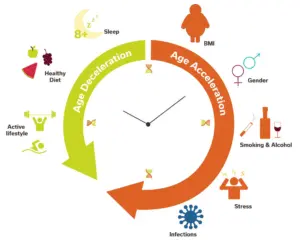
Image 1. The epigenetic clock
Mechanisms of Gene Expression-Regulating Actives
In 2026, leading laboratories are no longer simply racing for higher concentrations of traditional Retinol. Instead, the focus has shifted toward actives capable of modulating gene expression, such as Generation III Peptide Complexes. These peptide chains mimic regulatory proteins within the body, acting directly on Histones—the proteins around which DNA is tightly coiled. They help relax the chromosomal structure so that regenerative genes can be transcribed and reactivated. Furthermore, Telomere protection technology helps maintain the length of these chromosomal end-caps, thereby extending the biological lifespan of skin cells and preventing the accumulation of “zombie cells” (senescent cells) that trigger widespread inflammation and aging.
Image 2. Peptide structure
The Paradigm Shift: From “Anti-Aging” to “Age Reversal”
The core distinction of epigenetic technology lies in its proactive reprogramming nature. While traditional skincare focuses on replenishing what has been lost by supplying exogenous Collagen, Epigenetic Skincare focuses on stimulating the body’s self-production through genetic reactivation. Clinical data indicates that utilizing epigenetic modulators improves skin elasticity significantly faster than conventional methods. Plant-based Exosomes, rich in microRNA, serve as instructional signals that guide skin cells to self-regulate and counter the structural fractures caused by UV radiation and oxidative stress.

Image 3. Age reversal
The Future of Personalization Based on Biomarkers
The vision for the cosmetic industry in 2026 points toward skincare based on an individual’s unique gene expression map. High-end consumers no longer select products based on rudimentary skin types like “oily” or “dry.” The process begins with a Biomarker assessment. By analyzing epigenetic changes in the skin, experts can design a bespoke routine containing specific actives to “debug” the genes damaged by that individual’s unique environment. This represents the pinnacle of personalization, where science and aesthetics converge to maintain youthful vitality at the core structural level.
The Intersection of Biomedicine and Future Cosmetics
The Epigenetic Era has blurred the lines between cosmetics and biomedicine. We no longer accept aging as an inevitable, irreversible process. With the support of advanced science, “reprogramming” the skin to maintain cellular vibrancy has become a reality. This is not merely a trend; it is a revolution in how humanity dialogues with time, transforming every skincare step into an act of protecting and regenerating one’s own genetic legacy.
From Cosmetics Department
Comments (0)
Newest